
Cart
0
You may also like
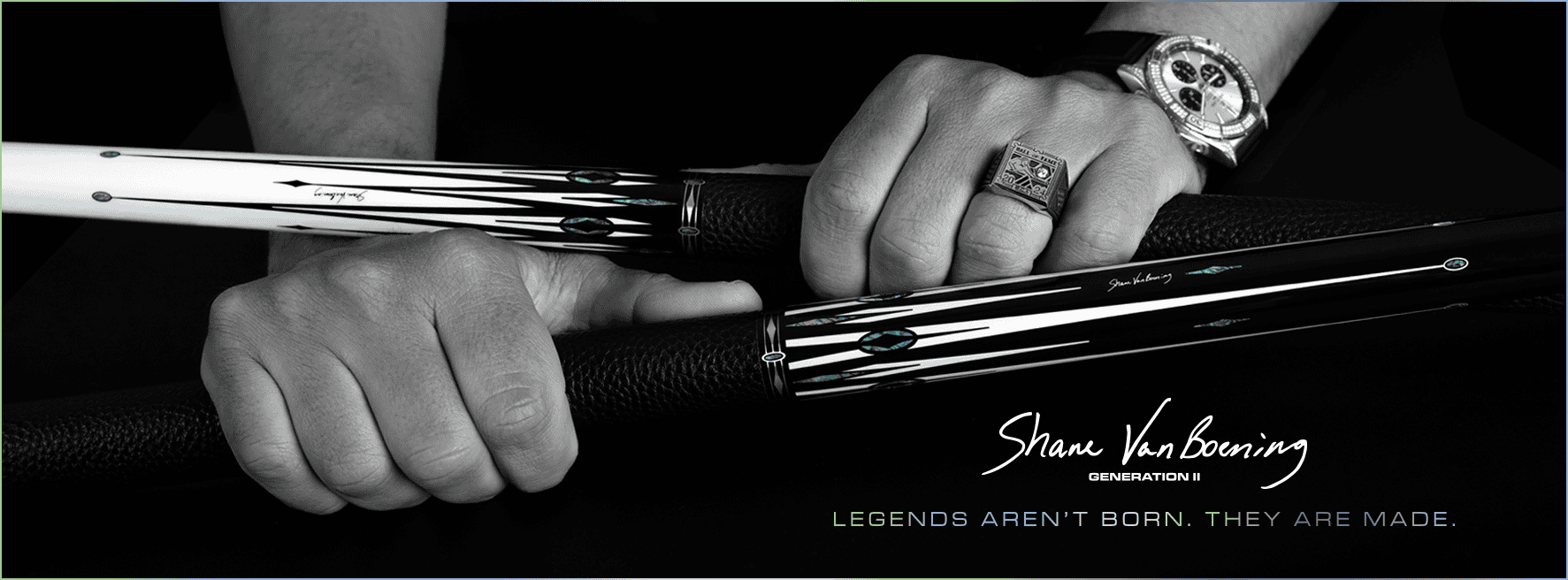
The Cuetec Cynergy SVB Gen II is the cue Shane Van Boening plays on the professional tour. If you want a shorter review than that, there it is. But if you're deciding whether to spend $945 on it — or whether to save $250 and buy the Gen I instead — you need more than a name drop.
This review covers everything: what changed from Gen I to Gen II, what the performance actually feels like, who it's built for, and whether the upgrade is genuinely worth the price difference.
Both the Gen I and Gen II are built around the same foundation — Cuetec's 15K aerospace-grade carbon fiber composite shaft. This is the shaft that won the Men's WPA World Title, the only carbon fiber shaft to do so. Understanding what makes it special is the starting point for understanding what you're actually buying.
The Cynergy shaft uses multi-ply military-grade unidirectional carbon fiber filaments — each just 7 microns in diameter, roughly 1/12th the width of a human hair. At the core sits Cuetec's proprietary polyurethane foam, which does two things most carbon shafts don't: it creates a wood-like sound on contact and reduces front-end mass to minimize deflection without making the shaft feel hollow or clinical.
You get a choice of two diameters at purchase:
Most players coming from a standard maple shaft should start with the 12.5mm. The 11.8mm rewards a developed stroke — if you're still building fundamentals, the extra precision it demands will work against you.
This is the question most buyers actually need answered. The shaft is identical between generations — the upgrade is entirely in the butt construction and aesthetics. Here's what specifically changed:
The most functionally significant upgrade. The Gen II moves the joint position to improve the cue's balance point. In practice this means the cue sits differently in your bridge hand — slightly more neutral, less tip-heavy. Players with a smooth, pendulum-style stroke tend to notice this immediately. If you've ever played with a cue that felt slightly front-heavy and had to consciously compensate, the Gen II addresses that directly.
The Gen I included Cuetec's original Acueweight system for weight customization. The Gen II upgrades this to the second-generation version, offering more precise weight adjustment and a more secure locking mechanism. This matters for players who dial in their cue weight carefully — you can fine-tune the feel without sending the cue back to the manufacturer.
The Gen I uses synthetic Abalone. The Gen II upgrades to genuine Abalone in the silver precision-cut rings, alongside a 10-point crown design with synthetic Abalone inlays throughout the butt. Beyond aesthetics, genuine Abalone signals the tier of craftsmanship — this is a cue built to look as serious as it performs.
The Gen I has a satin finish. The Gen II uses Cuetec's Clear-Tec® epoxy resin, which is significantly more durable and maintains its appearance under heavy use. For a cue in this price range that you're playing with regularly and potentially traveling to tournaments, this is a meaningful durability upgrade.
The Gen I uses black Irish linen. The Gen II upgrades to genuine pebbled full-grain leather running to the butt cap. Leather provides a noticeably different grip — warmer, slightly more tactile, and it improves with use as it conforms to your hand. Players who sweat during play typically prefer leather over linen for its moisture management.
The Cynergy shaft's defining characteristic is that it solved the problem every other early carbon fiber shaft couldn't: it gives you the low-deflection accuracy of carbon without making you feel like you're shooting with a plastic pipe. The polyurethane foam core creates a hit that's warmer and more responsive than hollow-core carbon shafts, while still being measurably stiffer and lower-deflection than any maple shaft.
On spin shots — draw, follow, and side English — the difference versus a standard maple shaft is immediately noticeable. You don't have to compensate as much for deflection, which means you spend less mental energy on aim correction and more on position planning. For league players running racks, this compounds quickly over the course of a match.
The relocated joint on the Gen II changes the feel in a subtle but real way. The balance point sits closer to center, which makes the cue feel more neutral through the stroke. Players who switched from the Gen I specifically note this as the difference that justified the upgrade — not the aesthetics, but how the cue sits in the bridge hand during a long straight shot.
The leather wrap makes a difference on extended sessions. Irish linen is excellent, but after two or three hours of league play your grip hand generates heat and moisture. The full-grain leather on the Gen II manages this better, maintaining grip consistency through the back half of a long match.
This is the actual decision most buyers face. Here's the honest breakdown:
Buy the Gen I (~$695) if: You're making your first jump into professional carbon fiber and you want to establish a baseline before spending more. The shaft is identical. The performance difference is real but subtle — and at $250 less, the Gen I delivers 95% of the Gen II's game impact. It's also the right call if aesthetics matter less to you than value.
Buy the Gen II (~$945) if: You've already played carbon fiber and know you're committed to this being your primary cue for the next several years. The balance improvement, leather wrap, durability upgrades, and premium finish are worth the premium for a player who competes regularly and wants a cue that looks and feels like the professional instrument it is. This is also the right call if you play longer sessions — the leather wrap earns its price over a season of league nights.
Both are available at Cue-Pros with same-day shipping.
This cue is not for beginners. At $945 it's a serious investment that rewards a player who already has a developed stroke and understands what they want from their equipment. Specifically, it's the right cue for:
If you play once a month casually, this is not your cue. If billiards is something you take seriously and practice consistently, the Gen II will pay for itself in performance and longevity over two or three years of use.
The Cuetec Cynergy SVB Gen II is the best complete carbon fiber playing cue available at its price point. The shaft is tour-proven, the butt construction is the most refined version of Cuetec's SVB platform, and the balance and grip improvements over the Gen I are real and felt under match conditions.
If you're ready to play with the same cue that won at the WPA World Championship level, this is it.
Shop the Cuetec Cynergy SVB Gen II at Cue-Pros →
Not ready to spend $945? The Cuetec Cynergy SVB Gen I (~$695) uses the identical shaft with the Gen I butt construction — the same carbon fiber performance at a more accessible entry point.


