
Cart
0
You may also like
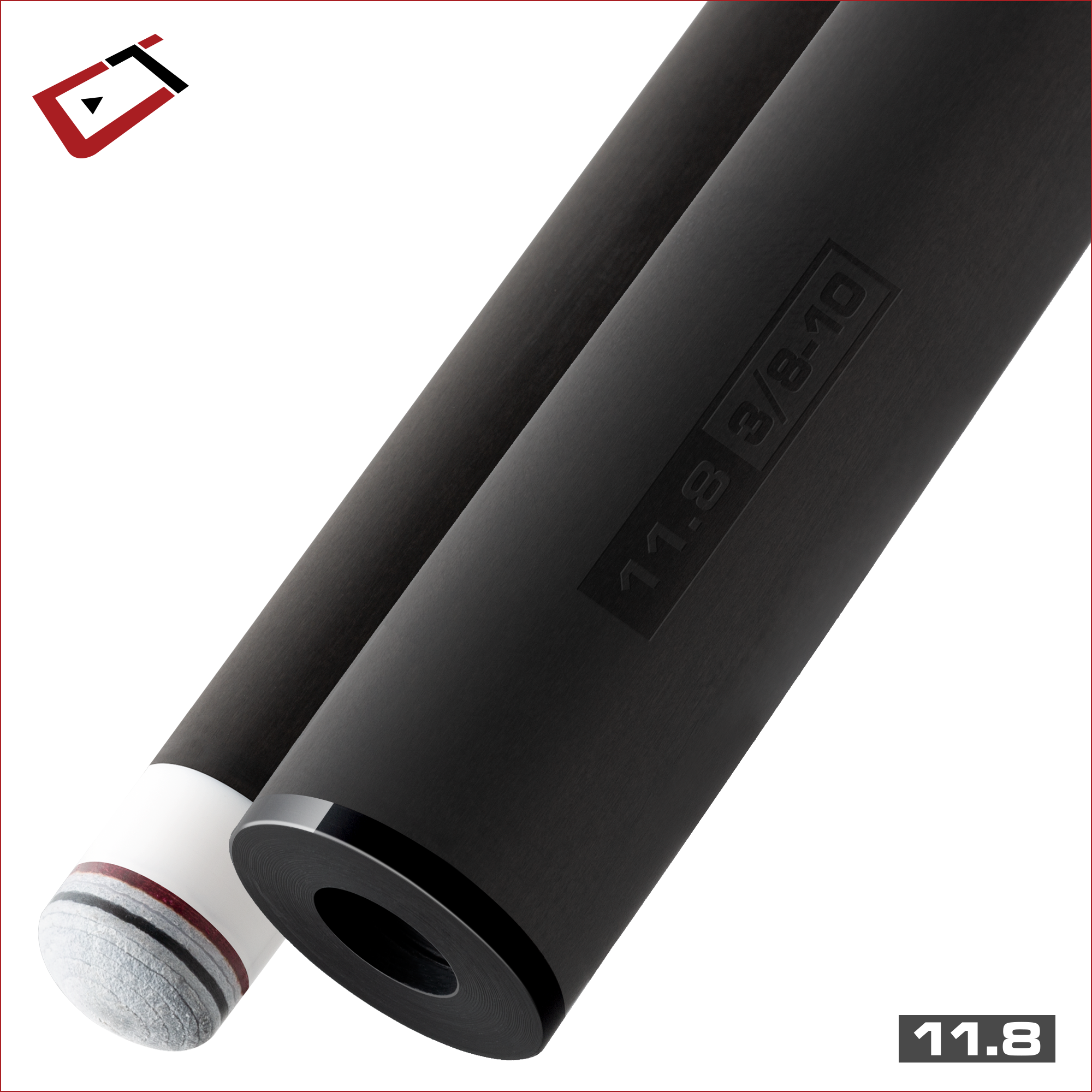
The Triple 60 Whyte Carbon and the Cuetec Cynergy are two of the most talked-about carbon fiber shafts in the $450–$600 range — and they’re both solving the same problem from completely different engineering directions. The Cynergy was built around a single piece of feedback from five-time U.S. Open Champion Shane Van Boening: “if I can’t feel it, I can’t use it.” The Triple 60 took a different path: players on AzBilliards have called it “wood on steroids” — the closest a carbon shaft has ever come to replicating the feel of a premium kielwood cue.
Both are excellent. But they are not the same shaft, and the wrong choice will cost you $500.
This guide breaks down exactly what makes each shaft different, where each one wins, and — most importantly — which type of player should buy which.
|
|
||
|
Price |
~$530–$600 |
~$449–$499 |
|
Construction |
Dual-core seamless carbon, micro-compression, multi-density fill |
15K aerospace carbon fiber, polyurethane foam core |
|
Tip sizes |
11.75mm, 12.25mm, 12.5mm, 12.75mm |
10.5mm, 11.8mm, 12.5mm |
|
Taper |
Standard pro taper |
15.5" super-straight (12.5) / 9.6" super-slim (11.8) |
|
Ferrule |
White ferrule, Kamui Clear Black Soft tip |
Ultra-thin 0.25" white sighting ferrule, Tiger Sniper tip |
|
Surface feel |
Raw carbon, non-coated, wood-like glide |
Smooth, low-friction coated finish |
|
Joint system |
Universal adapter — fits 10+ joint types |
Fixed joint — order specific pin type |
|
Sound on hit |
Warmer, wood-like feedback |
Slightly brighter, carbon sound |
|
Best for |
Multi-cue players, wood converts, feel players |
Players wanting proven tour-level performance |
|
Warranty |
Lifetime |
Limited lifetime |
Carbon fiber shafts have a reputation problem. The early generation was stiff, loud, plasticky, and it often drove players back to wood. Players who had spent years developing sensitivity through their maple shaft felt like they were shooting through a phone.
Every serious carbon fiber shaft manufacturer since then has been chasing the same goal: deliver the low-deflection accuracy and warp-proof durability of carbon, without sacrificing the warmth and feedback that pool players actually depend on.
"The billiards industry had focused on reducing deflection. It had overlooked the importance of feel and feedback." — Cuetec, on the design brief for the Cynergy
Triple 60 and Cuetec both solved this problem. They just used different engineering to get there.
Where it wins: Deflection performance, proven competitive pedigree, and a surface finish that many players find perfectly dialed. The Cynergy cleansing wipes included in the box are a nice touch for maintenance.
Construction: The Cynergy is built from multi-ply military-grade unidirectional carbon fiber filaments. Each filament is 7 microns in diameter, roughly 1/12th the width of a human hair. At the core sits Cuetec’s proprietary polyurethane foam, which does two things: it reduces front-end mass (less deflection) and creates a wood-like sound on contact. The result is a shaft that feels fundamentally different from hollow-core carbon shafts.
Taper options: The Cynergy comes in three diameters. The 12.5mm uses a 15.5-inch super-straight taper — very forgiving, easiest to adapt to from wood. The 11.8mm drops to a 9.6-inch taper and is designed for players who want more room for precise tip placement and heavier spin. The 10.5mm is the outlier — a hybrid-conical taper built for snooker, Chinese 8-ball, and large-table environments.
The tour credentials: The Cynergy 12.5 is the only carbon fiber shaft to win a Men’s WPA World Title. Shane Van Boening plays with it on the professional tour. That’s not marketing copy — it’s meaningful signal about real-world performance under pressure.
Where it falls short: You’re locked into one joint type per shaft purchase. If you own three cues with different joint pins, you need three Cynergy shafts. Some players also find the surface slightly more clinical than the Triple 60’s raw carbon feel.

The Cynergy is the right call if:
• You play with one cue and one joint type consistently
• You compete in leagues or tournaments and want proven tour-level performance
• You’re upgrading from a standard maple shaft and want the most straightforward adaptation curve (the 12.5mm especially)
• You want a shaft that’s been battle-tested at the WPA World Championship level
The 12.5mm is the entry point for most players. If you already shoot with a thinner tip and use a lot of English, the 11.8mm is worth the upgrade — it’s built for spin-heavy position play.
Where it wins: Players who own multiple cues get one shaft that works across all of them. The raw carbon, non-coated surface is preferred by many feel-forward players. The wood-grain option is genuinely unique in the market.
Construction: The Triple 60 uses dual-core seamless carbon construction (a single carbon fiber bundle rather than layered plies) combined with micro-compression technology and a multi-density fill pattern. The result is total radial symmetry, which means the shaft performs identically regardless of how it’s oriented. Triple 60 calls this "uniform bending properties," which, in practice, means more predictable deflection on every shot.
The wood-grain option: Triple 60 produces a wood-grain finish variant that is genuinely different from any other carbon shaft on the market. The protective coating on the wood grain finish creates a slightly different glide feel. Players who have spent decades on wood report that this variant is the closest carbon has ever gotten to the real thing.
The universal adapter system: This is what separates Triple 60 from every other shaft manufacturer. Their patent-pending universal adapter system lets you swap joint pins in seconds using one included tool. A single Triple 60 shaft can fit a 3/8 x 10, 5/16 x 14, 5/16 x 18, Radial, Uni-Loc, and a dozen other joint types by swapping a small adapter. If you own multiple cues with different joints, this changes the math entirely.
Where it falls short: Less name recognition than Cuetec on the competitive circuit. Slightly higher price point at the top end. The adapter system, while a genuine innovation, does add a small amount of complexity for players who just want a plug-and-play upgrade.

The Triple 60 is the right call if:
• You own two or more cues with different joint types — the adapter system turns one $530 purchase into a shaft for your whole bag
• You’ve tried carbon fiber before and hated the feel (the wood-grain variant or raw carbon finish is the closest the market has to wood feedback in a CF shaft)
• You’re a PBIA instructor or serious recreational player who teaches and wants to feel every nuance of the hit
• You’re playing with a Viking cue — Triple 60 is Viking-affiliated and designed to fit Viking joints natively
This is the argument that’s barely been made anywhere, and it’s genuinely compelling.
A serious player with three cues — say a playing cue, a break cue butt, and an older cue they still love — typically needs three separate shafts to go carbon. At Cynergy prices, that’s roughly $1,350–1,500.
With Triple 60, you buy one shaft (~$530) and three adapters (~$30–40 each). Total: approximately $620–$650. Same carbon fiber performance across all three cues, from one shaft.
One Triple 60 shaft + three adapters ≈ $650. Three Cynergy shafts ≈ $1,350+. If you own multiple cues, the math is hard to argue with.
The adapter compatibility covers the most common joint types on the market:
|
Joint Type |
Fits These Cue Brands |
Adapter Available at Cue-Pros |
|
3/8 x 10 |
Lucasi, Players, Valhalla, many others |
Yes |
|
5/16 x 14 |
Cuetec, Viking, Meucci, others |
Yes |
|
5/16 x 18 |
Viking Quick Release, others |
Yes |
|
Radial |
Pechauer, OB, others |
Yes |
|
Uni-Loc |
Balabushka, others |
Yes |
If you play with one cue, compete seriously, and want the shaft that’s been used to win at the highest levels of the game, then buy the Cynergy. It’s proven, it’s polished, and the feel is excellent.
If you own multiple cues, are coming from wood and struggled with CF feel before, or want more flexibility in how you invest, then the Triple 60 is your best bet. The adapter system is a genuine innovation, the feel is the warmest in carbon, and the value proposition for multi-cue players is hard to beat.
Either way, you’re upgrading to one of the best shaft categories in the game. Both are warp-proof, both are low-deflection, and both will outlast any maple shaft you’ve ever owned.
You can find both the Cuetec Cynergy Collection and the Triple 60 Whyte Carbon here at Cue Pros! But there's more - any cue over $400 is eligible for a private pricing option. Want to negotiate a better price for your cue? Call us today!


