
Cart
0
You may also like
New pool players, especially those in the market for their first cue, are sometimes overwhelmed by all the weight options standard cues have to offer. And asking your peers for their personal preference usually isn’t helpful. The truth is that while there is no “correct” cue weight, there is a weight that works best for you, and finding it can transform your game.
Our resident pro player, Thomas Hart, has tested cues across the weight spectrum in competition and practice. His philosophy is simple: the best weight is the one that lets you break hard while keeping your grip loose. Anything that tightens your stroke or throws off your timing is working against you.
In this guide, we'll break down the spectrum of weights, why pros tend to prefer 19oz, how to decide if you should go heavier or lighter, and how to adjust your cue’s weight. Even if you’re a total beginner picking up your first cue, this article will give you the knowledge to make an informed choice. Let's dive in.
18 to 21 oz represents the standard spectrum of light to heavy cues. An 18oz cue is considered light, and light cues enable quicker wrist action and faster acceleration, which can be beneficial for players who rely on delicate touch shots. However, that same lightness can work against you when you need power.
A 21oz cue, on the other hand, is heavy by most standards. The extra mass delivers more natural momentum, so you don’t have to swing as hard to achieve the same cue-ball speed. But a heavier cue can feel sluggish on quick-response shots, and over time, may cause shoulder or wrist strain.
In short, light cues prioritize speed and finesse; heavy cues prioritize power and stability. The “right” choice depends entirely on your stroke style, physical strength, and how the cue balances (forward vs. rear-weighted). Let’s discuss the details that help you select the right weight.
If you polled the top professionals on tour, you’d find a range of preferences, but you’d also hear a clear crowd favorite: 19 ounces. For many players, a 19oz cue provides enough heft to power through break shots and deliver solid momentum on long follow-throughs, yet it remains light enough to allow quick adjustments, spin generation, and a relaxed grip.
Take Cue Pros’ very own resident pro player, Thomas Hart, who has tested cues across the weight spectrum and settled on 19oz as his go-to. As he puts it:
“18oz feels just a little too light for me, and anything heavier than 19oz tends to require more muscle tension throughout the stroke, making it difficult for me to maintain a loose grip. But you may prefer a different size as long as it allows you to break hard while still keeping your grip loose.”
Thomas echoes what many pros will tell you: weight is personal. Some power breakers lean toward 19.5oz or 20oz; some finesse players drop to 18.5oz. If you can deliver an explosive break without tightening your forearm or clenching the wrap, you’ve found your weight.
There’s no universal "perfect" number stamped on a cue butt that guarantees a win. If there were, every pro would use the exact same weight, and yet they don’t. What does exist is a best weight for you, and finding that requires honest self-assessment of your mechanics and playing style.
That said, 19oz serves as the industry’s unofficial benchmark for a reason. It works for the majority of players in the majority of situations. But if you’re consistently missing long shots or struggling with break power, it might be time to move up or down. The following two subsections will help you decide which direction to go.

Like many professional cues, the Cuetec SVB Gen II (above) is standard at 19oz, but also comes in 18oz, 20oz, and 21oz
A lighter cue (typically 18oz) is ideal for some players and playing conditions. Consider going lighter if any of these scenarios sound like you:
Caveat: If you go too light, you may lose stability on off-center hits (more deflection) and find yourself swinging harder than necessary on power shots. Always test a lighter cue with your normal break stroke—if your accuracy drops, it may be too light for your mechanics.
If 18oz is considered "light" for a playing cue, you might raise an eyebrow at cues weighing 13oz or 14oz. Are they toys? Junior cues? Actually, no—these ultra-light cues are highly specialized tools designed specifically for speed.
A lighter cue requires less effort to accelerate, which means you can generate rapid tip speed with minimal muscle input. In certain situations (particularly jump shots), speed often matters more than raw mass. A fast, light cue can "get under" the cue ball more quickly for a jump, or create explosive action on the break without wearing out your arm.
For example, consider a cue like the Lucasi Launch. At just 13 ounces, the Launch is intentionally designed as a dedicated jump cue. Its ultra-light construction allows for lightning-fast acceleration, making it easier to pop the cue ball over obstacles with minimal effort.
Another great example is the Triple 60 Satellite, which weighs in at 13.5 ounces, but with an optional 4.5-ounce weight cartridge that can be inserted into the butt. This modular design gives players the best of both worlds: a featherlight feel for finesse jumps, or a heavier setup for a more traditional power break, all in one cue.

Lucasi Launch 3 Piece Jump Cue
Heavier cues (typically 20oz to 21oz) are often misunderstood as "power cues" for big breakers only. While they do excel at that, they offer other benefits worth considering. Go heavier if:
Caveat: The biggest trap with a heavy cue is over-muscling. If you find yourself tightening your grip, gripping farther back on the butt, or feeling sore after a session, the weight is working against you. Also, heavier cues can exaggerate your flaws. For instance, if your stroke has a hitch, the extra mass makes it harder to correct mid-swing.
You might wonder: if 19oz is the pro sweet spot and 21oz is considered heavy, why do cues like the Rage Heavy Hitter exist at a whopping 25 ounces? It’s because these ultra-heavy cues are purpose-built for one job: the break shot.
The sheer mass of a 25oz cue generates tremendous momentum. You don’t need to swing as hard to achieve a powerful, explosive break, which can help you maintain better control and accuracy during the most violent shot in the game. The extra weight also transfers more kinetic energy to the rack, often resulting in a wider, more consistent spread of the balls.

The Rage Heavy Hitter is one of the heaviest cues on the market at 25oz
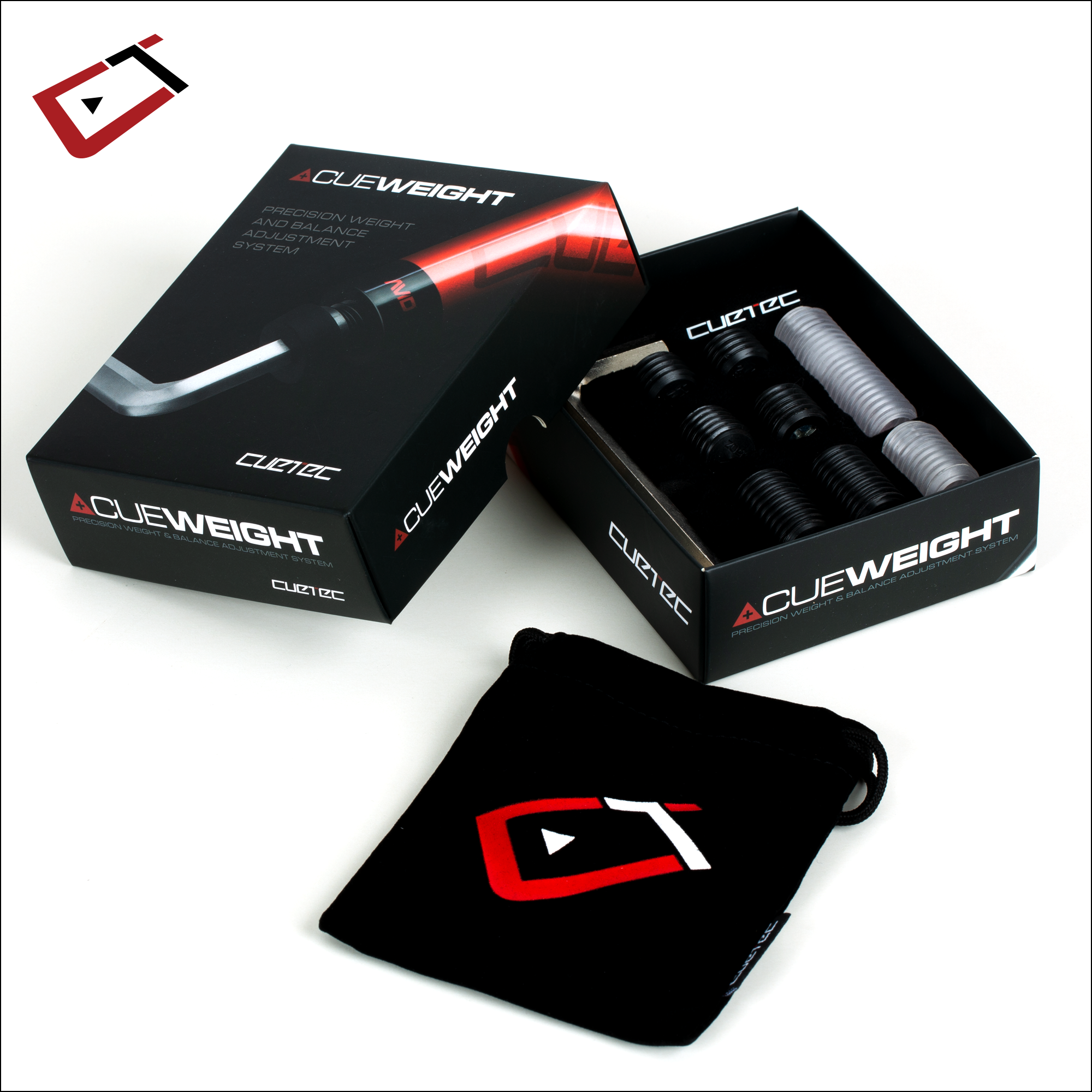
Most modern cues can be adjusted to add more weight. The most common method involves the weight bolt system hidden inside the butt of the cue. Here’s how it typically works:
Important notes: Not all cues are compatible with every weight system. The maximum weight you can typically add is around 3.5 ounces, and the dry (unweighted) weight of most cue butts starts around 14 ounces. If you’re unsure, check with the cue manufacturer or a reputable dealer before buying weight bolts to ensure compatibility.
Ready to find your perfect weight? At Cue Pros, we stock a wide selection of cues from 18oz to 21oz (plus specialty break cues like the Rage Heavy Hitter). And with same day shipping on a wide variety of products, it’ll feel like you walked out of the store with your brand new cue.
Browse our full collection today and discover why players trust Cue Pros for equipment that performs as hard as they do.


